What Sherry Casks Give Our Whisky

The Origin of Sherry casks
A sherry cask is an oak barrel that held sherry before it held whisky. Fill it with maturing spirit and the wood gives back what it soaked up: dried fruit, nuts, warm spice and colour.
We've used them at Laphroaig for one reason. They give our peat smoke something to push against.
What Are Sherry Casks and How Do They Shape Scotch Whisky?
Here's what these barrels are, what they do to Scotch whisky, which types we fill, and where they show up in our range.
A sherry cask is an oak barrel that previously held sherry, then gets filled with maturing spirit. In our warehouses that means European Oloroso sherry oak and Pedro Ximénez butts.
Wood sets the scene without stealing it. Ex-Bourbon American oak lifts vanilla and coconut and keeps our distillery character clean. Sherry-seasoned casks add warmth and spice over the maritime core. Smaller formats, like our quarter casks, draw the smoke close and deepen texture. Refill casks give length and composure.
Different angles of the same shore. The island stays in charge.
What sherry cask whisky tastes like
Dried fruit and dark sweetness, mostly. Across our sherry-matured bottles the notes run like this.
- Fruit. Raisins, sultanas, creamy apricots.
- Dark sweetness. Toffee, maple syrup, dark chocolate, liquorice.
- Spice. Cloves, a ginger kick, a dry oak grip at the end.
- Nuts. Nuttiness through the finish, marzipan when you add water.
- Colour. Antique gold through to tawny and auburn.

Full maturation or a finish
Some of our whiskies spend their whole life in one kind of wood. Most of the sherry ones don't.
The usual route here is ex-Bourbon barrels first, which is where the backbone comes from, and sherry oak at the end. Our 10 Year Old Sherry Oak Finish works that way. So does PX Cask, which goes through three stages: ex-Bourbon barrels, quarter casks, then Pedro Ximénez butts. Triple Wood is named after the same idea.
Doing it in that order is deliberate. The whisky builds its character first and picks up the sherry on top. Peat leads. The wine follows.


The types of sherry cask we fill
Not all sherry is the same, so not all the wood behaves the same
Oloroso
The workhorse of our range. Oloroso butts sit behind more of our whisky than any other sherry wood: 10 Year Old Sherry Oak Finish, Triple Wood, Lore and Select All four are below.
What they give us is aromatic honey over the peat smoke, cloves and leather, toffee and dark chocolate, and a nutty, briny finish. Ours are European oak, and that's where the spice comes from.
Pedro Ximénez
Sweeter, heavier, darker. PX butts are the final stage of PX Cask, where they bring sultanas, raisins and liquorice, and a long dry close of peat and thick sherried oak. Add water and the marzipan comes through.
PX hogsheads go into Select too, in smaller measure.
A word on the oak itself
Two woods, two results. American oak is charred on the inside and lifts sweet vanilla and coconut. European oak is where our Oloroso casks come from, and it carries the sherry sweetness and spice. We fill both, often in the same whisky, and Select goes one further by finishing in new American oak, which is rare wood for Scotch.


Sherry barrels have their own names
We name our casks by size, and every name below is one we fill
Butt — the big ones. Our Oloroso and Pedro Ximénez wood arrives in butts.
Hogshead — smaller. It's how the PX for Select comes to us.
Quarter cask — smaller again, the 19th-century format we brought back.
Small barrels hold more wood per drop of whisky, so they work faster and deeper. They draw the smoke close and deepen texture. Quarter casks are part of how we build PX Cask, Triple Wood and Select before the sherry stage ever begins.
How we make our sherry cask whisky
Nothing changes at the start. We hand-turn our malted barley on the malting floors. We burn Islay peat at unusually low temperatures, so the smoke goes on cold and flavours the malt rather than scorching it. We use water from the Kilbride Stream. We distilslowly.
Then the spirit goes into oak, and the waiting starts. Ex-Bourbon barrels first, which is where the backbone comes from. The Spanish wood after, for months or years depending on what the whisky needs. Our warehouses sit on the shoreline, so everything breathes salt air the whole time. You can taste that.
Each barrel is hand selected. Not sorted by spec, chosen. Our Senior Whisky Blender, Sarah Dowling, and the team decide which casks add what the whisky needs, the way their predecessors have done here since 1815. It's the part of the craft you can't write down, and it's why our heritage matters more than any specification.
We do all of this because it's what makes Laphroaig. The right way, not the easy way. There's a fuller step-by-step guide to how we make whisky if you want the detail, and you're always welcome to come and see it happen at the distillery.

Where sherry casks show up in our range
SIx bottles, six different answers to the same question


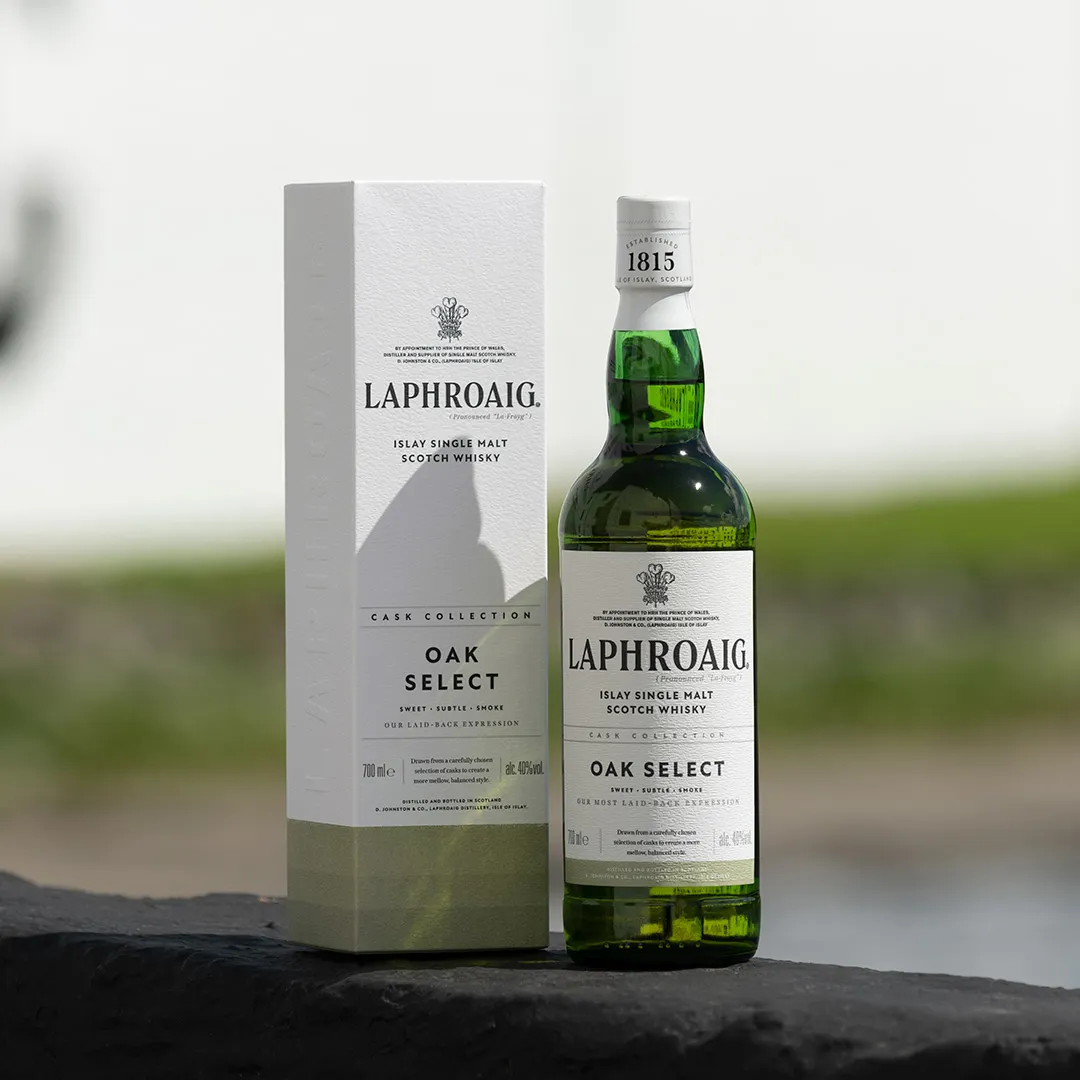
Oak Select
The easiest way in. Our Master Distiller draws on Oloroso sherry butts, Pedro Ximénez sherry hogsheads and first-fill ex-Bourbon quarter casks, then finishes the whisky in new American oak, which is rare wood for Scotch. Sweet and smooth, with our peat smoke and seaweed still out in front and room left for red fruit, lime and a floral close.
10 Year Old Sherry Oak Finish
Our 10 Year Old matured in ex-Bourbon barrels and then finished in European Oloroso oak. Tawny and auburn in the glass. The nose is peat smoke and Manuka honey with cloves, leather, iodine and smoky bacon. The palate turns sweet and waxy, with toffee, maple syrup, dark chocolate and cedar. The finish holds on to sweetness, smouldering peat, nuttiness and a hint of brine.
Double Gold at the San Francisco World Spirits Competition in 2022. Gold at the IWSC in 2021. If you're starting anywhere, start here.
Triple Wood
Three casks, in order: American oak ex-Bourbon barrels, quarter casks, then large European oak Oloroso for the final stretch. Sweet raisins and creamy apricots on the nose, with nuttiness, bonfire ash and earthy peat behind. Softer than most of our range, and mouth-filling at the end.
PX Cask
Triple aged. Ex-Bourbon barrels, then 19th-century-style quarter casks, then Pedro Ximénez butts. Antique gold, with sultanas, raisins and liquorice on the nose. The palate carries peat smoke, layers of oak and a heavy, sweet weight. Long and dry at the close, all peat and thick sherried oak. Add a splash of water and the marzipan comes through.
AVAILABLE ONLY AT DUTY-FREE.
Lore
Our richest bottle. Whiskies aged from seven to 21 years, drawn from ex-Bourbon barrels, European oak, Oloroso casks and quarter casks, then brought together. Pungent peat smoke and seaside minerals, ash and chocolate on the nose. Bitter chocolate, ash and a chilli bite on the palate.
Every generation of our distillers left something in this one.
25 Year Old Cask Strength
A quarter of a century in ex-Bourbon barrels and large Oloroso butts. Peat smoke with a medicinal edge, met by creamy vanilla from the American oak and spiced apple from the Spanish. Bottled at cask strength, straight from the barrel, with a long warm finish that leaves a mark.
The oldest whisky in our core range, and the clearest proof that waiting works.
Willem by Willem
A 14 Year Old finished in Oloroso, chosen by Willem Dafoe alongside our Senior Whisky Blender, Sarah Dowling. Picked without tasting notes and released without them. What you taste is up to you.
How to drink sherry cask whisky?
Neat, first. Always. Give it a minute in the glass and let the smoke settle
Then a few drops of water, which opens up the honey, the toffee and the nuts. Ice will soften the intensity if that's what you're after; there's no wrong way, only your way.
This kind of whisky also holds its own in a glass with other things in it. The dried fruit and dark sweetness stand up to bitters, coffee and citrus, which is why our whisky cocktails work as well as they do. The Bold Fashioned is a good place to begin.
For food: dark chocolate, salted almonds, hard aged cheese, anything smoked. Salt and sweetness have always got along.
Oak, in both European and American varieties. In Jerez, the wine matures in stacked butts through a solera, where older wine is topped up with younger. Wood destined for whisky is usually seasoned for one to two years, then emptied and shipped.
Supply and time. Production in Jerez has shrunk over the last century, so the wood is scarce, and a seasoned butt costs many times what an ex-Bourbon barrel costs. Add a year or two of seasoning before it even reaches Scotland, and the maths shows up in the bottle.
No. The barrel is emptied before it's filled with spirit. What's left is flavour held in the wood, not sherry in the glass.
Dried fruit, nuts, dark sweetness and warm spice, with a fuller texture and a deeper colour than the same whisky in ex-Bourbon wood. Sweeter, yes, but sweet is relative: PX leans furthest that way, Oloroso stays drier and nuttier. In ours, the peat never gets out of the way.
Oloroso is dry, so its wood gives nuts, dried fruit and clove spice with real weight. Pedro Ximénez is made from sun-dried grapes and is far sweeter, so its wood gives sultana, liquorice and treacle.
Our 10 Year Old Sherry Oak Finish. It's built on the whisky people meet us through, so you can taste exactly what the wood changed.

Welcome to Laphroaig.
Hand-dipped. One at a time. Every time.
Welcome to Laphroaig.
Have you reached the right maturation to drink legally? Tell us your age to enter our distillery.
Laphroaig encourages responsible drinking. Alcohol should be consumed in moderation. By entering this website, you are agreeing to our Terms and Conditions, Privacy Policy and Use of Cookies.
Must be legal drinking age to enter this site.